
Case
03 Aug, 2026
When I see a problem, I see multiple solutions. I always think about what’s best for the customer.
That mindset recently helped Jairo Alberto, Airfreight Team Lead in the US, prevent a customer from facing a costly delay on an urgent reefer shipment from Norway to New Zealand.
The customer needed two refrigerated containers delivered within two weeks, but when the shipment reached Houston, there was no direct vessel option, and a traditional ocean freight routing would have taken roughly 45 days.
Airfreight was an alternative, but the customer needed a solution that balanced both time and cost efficiently.
For Jairo, finding that next option is a familiar part of the job. His work sits in the space between the customer’s deadline and the realities of capacity, routing, vendors, documentation, and handovers – all to protect the customer’s timeline.
From 45 days to 19
Instead of accepting the original transit time, Jairo and the team built an alternative solution around the customer’s deadline.
The cargo was picked up immediately, moved to Los Angeles, transloaded, and loaded onto a vessel bound for New Zealand. Within a day and a half of the customer’s request, the shipment was already on the move.
By coordinating pickup, transload, and port handling through connected partners, the refrigerated containers reached New Zealand in 19 days rather than 45.
The result was not only a faster transit time. It also helped the customer avoid additional costs.

For Jairo, details like limiting handoffs between vendors are critical.
‘When too many people are involved, things can go wrong,’ he says. ‘Keeping the shipment connected through one chain creates less margin for error.’
That detail is often invisible to the customer. But behind the scenes, fewer handovers mean fewer delays, fewer misunderstandings, and a more controlled path from origin to destination.
When the plan needs rebuilding
That same practical approach also matters when a shipment is already in motion, and something closer to home goes off track.
In a recent airfreight shipment from Jacksonville to Miami, a trucker repeatedly missed pickup appointments. By the third day, the customer was frustrated, and the shipment risked missing its final delivery commitment.
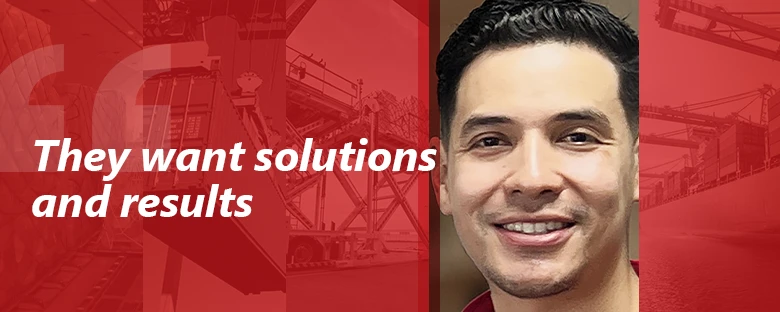
At that point, they don’t want to hear excuses. They want solutions and results.
Instead of passing the problem back to the customer, Jairo and the Houston team rebuilt the transportation plan in the background. New trucking arrangements were secured, routing was adjusted, and updated flight bookings were coordinated to keep the shipment moving.
The cargo ultimately arrived on time at the customer’s final destination.
‘When they look good, we look good too.’
Both examples illustrate the same principle: whether designing a new route or adjusting a shipment in motion, practical problem-solving, clear coordination, and a connected chain of responsibility ensure the customer meets their commitments.
And for Jairo, that is the most rewarding part of the work:
‘When customers tell us, “Because of you, we met our target date,” that’s the best feeling,’ he says and concludes: ‘When they look good, we look good too.’



 Login
Login